How to identify a Lone Star tick
Answer what you can see: its size, its markings, its legs and where you found it. The key below narrows our eight species down to the ones that fit. It helps you guess, but an expert has the final word.
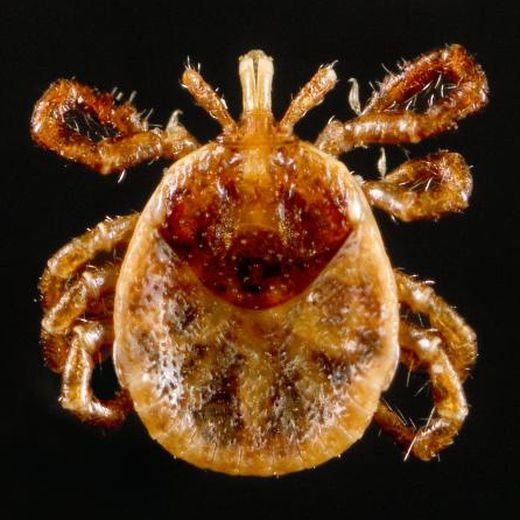
Nymph1–1.5 mm
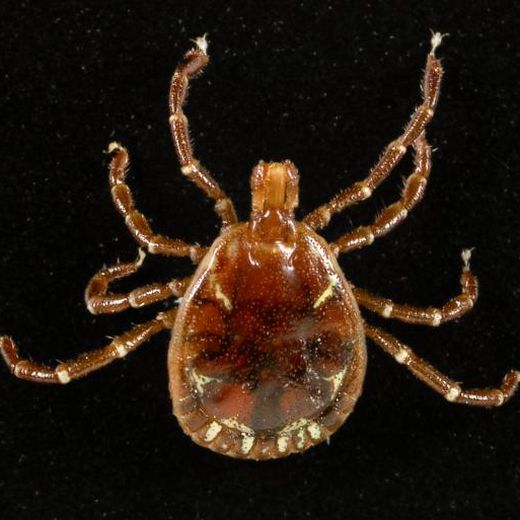
Adult male3–4 mm
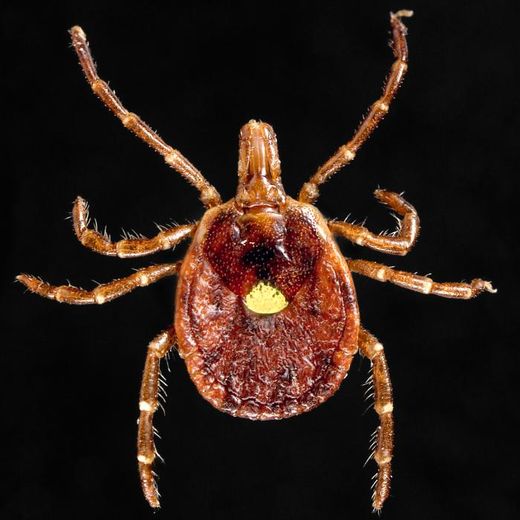
Adult female3–4 mm
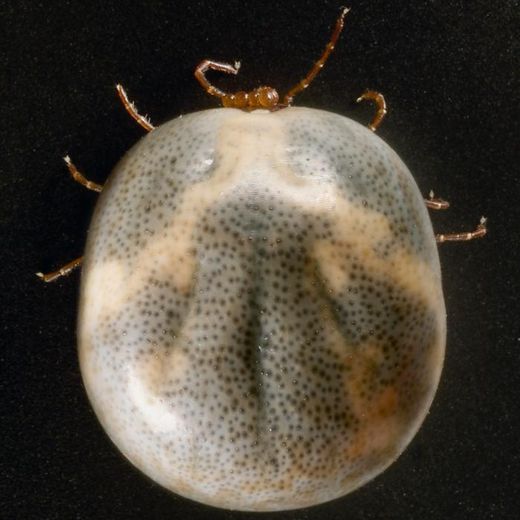
Fed female10–16 mm
Fig. 1. The Lone Star tick, Amblyomma americanum, from above. Only the adult female has the single cream spot. The male has pale streaks around the rear edge instead, and the nymph has no spot at all. After a meal a female swells and turns grey. Enlarged, not to scale: Fig. 2 shows their real sizes.
Photos: James Gathany, CDC. Public Health Image Library (phil.cdc.gov) #9535, #8684, #8682 and #8679. Public domain. PHIL pages: Nymph · Adult male · Adult female · Fed female
What can you see?
Answer any of these, in any order. The result updates as you go, and tapping an answer again clears it.
How big is it, roughly?
Tap the closest. Each tick lies on the same millimetre ruler, with its head to the right.
About real size on most screens. The circles show the smallest ones enlarged.
Draw these at real size on your screen
Pick something you have to hand, hold it against the screen and drag the slider until the outline matches it. Every tick on this page is then drawn at its real size.
Is it flat, or swollen with blood?
A tick that has fed changes colour and shape, and its markings stretch out.
What does its back look like?
The most useful thing to look at on an unfed tick.
What colour are its legs?
Where did you find it?
Life stages, at the size they really are
- Larva0.5 mmabout a pinhead, 6 legs
- Nymph1–1.5 mmabout a poppy seed, 8 legs
- Adult3–4 mmabout a sesame seed, 8 legs
- Fed female10–16 mmabout a pea, 8 legs
These are simple drawings to help you know what to look for. They cannot replace an expert. If you are not sure, seal the tick in a bag and ask your state health department or a university extension program.
Full field guide by species
Each species page has its markings, size, range, and the diseases it carries.
Tick identification FAQ
What does a Lone Star tick look like?
Adult female Lone Star ticks are reddish-brown with a single, distinctive white dot (the 'lone star') on the back. Males have scattered white streaks along the edge. Nymphs are very small, about the size of a poppy seed, which is why many bites go unnoticed.
How is a Lone Star tick different from a deer tick?
Lone Star ticks are larger and bite readily, and the females have one white dot. They are the tick most linked to alpha-gal syndrome. Deer ticks, also called blacklegged ticks, are smaller and darker, with an orange-red back half. They are the main tick that spreads Lyme disease.
What does an American dog tick look like?
American dog ticks are brown, with a gray or cream patterned shield behind the head. They tend to be larger and rounder, especially after a meal. They can spread Rocky Mountain spotted fever.
How big are ticks at each life stage?
For the Lone Star tick: larvae are about 0.5 mm (roughly a pinhead), nymphs about 1 to 1.5 mm (close to a poppy seed), and unfed adults about 3 to 4 mm (roughly a sesame seed). A fully fed female swells to about 10 to 16 mm, pea-sized. Nymphs cause many bites because they are so easy to miss.
Can I identify a tick myself?
The key on this page narrows the list by size, markings, leg colour and where you found it. It cannot give you a final answer, and some kinds of tick look the same to the eye. If it matters, seal the tick in a bag with a damp paper towel and take a clear photo. Then ask your state health department or a university extension program.
Sources
- 1.Where Ticks Live (opens in a new tab) · CDC
The Lone Star tick is widely distributed in the Northeast, South, and Midwest U.S.
- 2.Alpha-gal Syndrome (opens in a new tab) · CDC
What alpha-gal syndrome is, symptoms, and its association with tick bites.
- 3.TickEncounter Resource Center (opens in a new tab) · University of Rhode Island
Tick identification, prevention, and reporting resources.
- 4.Lone Star Tick (identification and life stages) (opens in a new tab) · Texas A&M AgriLife TickApp
University extension guide to the Lone Star tick's markings, life stages and seasons.